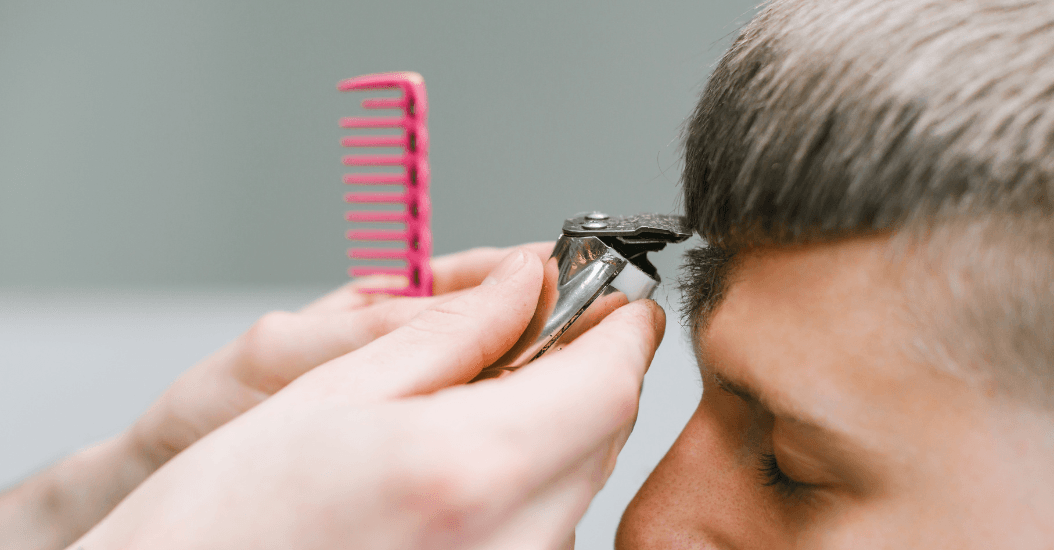
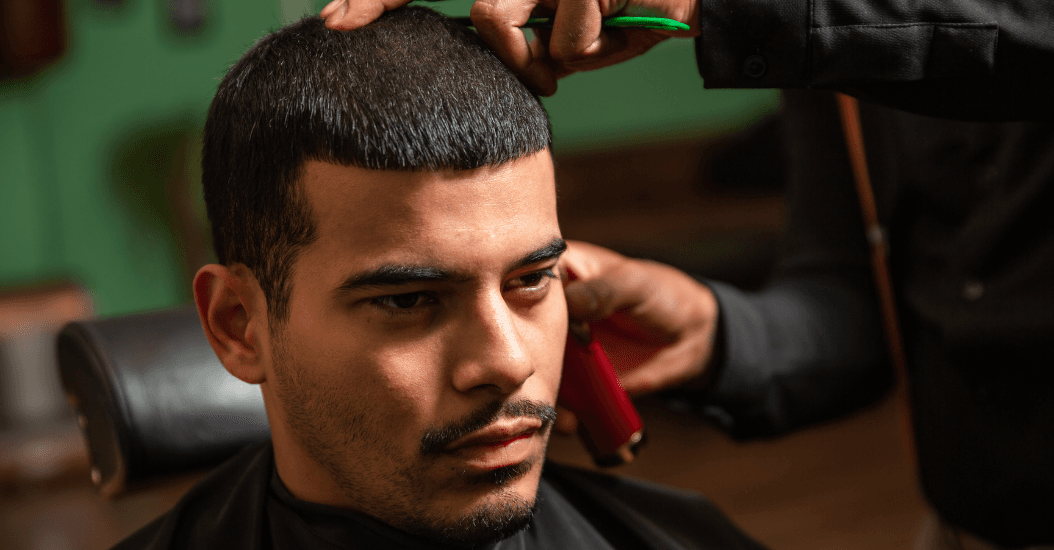
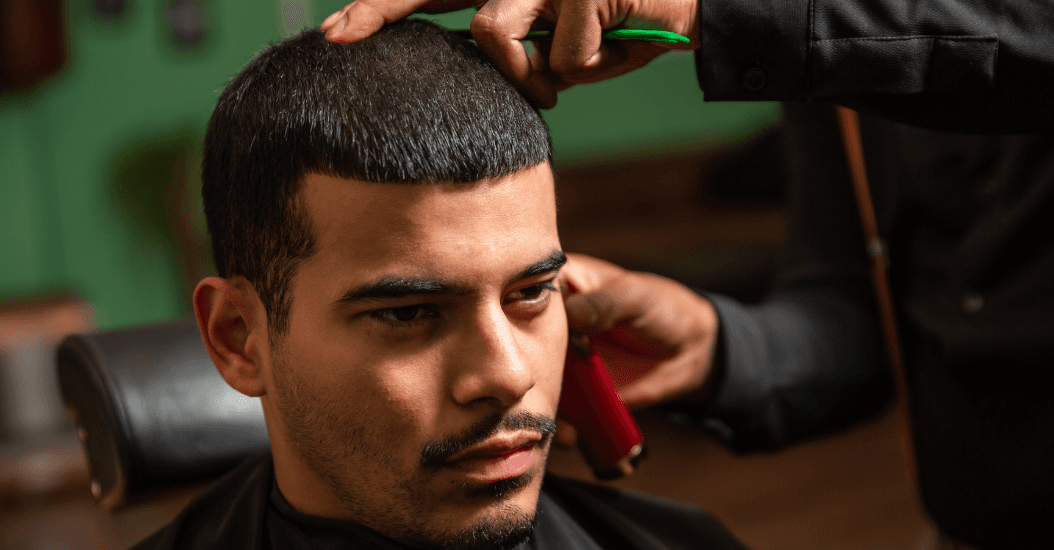
There’s a reason the quiff has outlasted almost every other men’s trend of the last seventy years: it’s one of the only styles that works as well with a sharp side part in the office as it does messy and undone on a night out. Whether you want it sleek and structured or soft and textured, a good quiff hairstyle adapts to you rather than the other way around.
Below, we’ve rounded up 20 of the best hairstyles with a quiff, including the original rockabilly classic to the modern skin-fade and curly variations, along with the face shape, hair type, and styling advice you need to get it right at home or in the chair.
What Is a Quiff Hairstyle?
A quiff is a men’s hairstyle built around volume at the front of the head, lifted and swept upward and back, usually paired with shorter sides. That contrast, height on top, cleaner length at the sides, is what gives the quiff its shape, whether it’s cut close with a fade or left slightly longer and blended in.
What makes the quiff different from a lot of other short-on-the-sides styles is how much room it leaves for personality. Slick it back with a strong-hold pomade and it reads sharp and formal. Rough it up with a matte clay and it reads relaxed and lived-in. Same haircut underneath, completely different finish.
A Brief History of the Quiff
The quiff’s roots go back to the 1950s rockabilly and greaser scenes, where it became shorthand for a certain kind of confident, slightly rebellious cool, Elvis Presley is the name most associated with popularising it, though the look ran right through that era’s youth culture.
It didn’t stay in the 1950s, though. The quiff resurfaced through several distinct waves: rockabilly revival and new wave styling in the 1980s, the indie and Britpop scenes of the late 1990s and 2000s (think a young David Beckham), and more recently a softer, more textured take championed by musicians and footballers alike. Each era has reshaped the quiff slightly, sharper and more graphic with today’s skin fades, softer and more tousled in its current “lived-in” form, but the basic idea of lifted volume at the front has never gone out of circulation.
Quiff vs. Pompadour vs. Undercut: What’s the Difference?
These three get mixed up constantly, so it’s worth being precise:
- Quiff: Volume concentrated at the front, swept up and back, usually with shorter sides. It’s the most versatile of the three and moves easily between casual and smart.
- Pompadour: More height, more length, and a smoother, more uniformly slicked-back finish across the whole top of the head, not just the front. It reads more formal and more retro than a quiff.
- Undercut: Technically a description of the sides and back (very short, often shaved, with a hard contrast to the top), rather than the top styling itself. An undercut can be paired with a quiff, a pompadour, or slicked-back hair — it’s the foundation, not the finish.
In practice, a lot of the styles below are technically an undercut quiff or quiff with a fad, the undercut describes what’s happening at the sides, the quiff describes what’s happening on top.
Choosing Your Quiff: Face Shape, Hair Type and Length
Face Shape
- Round faces: A taller, more lifted quiff elongates the face and adds definition, this is one of the most flattering face-shape pairings for the style.
- Oval faces: Oval is the most forgiving shape for a quiff. Go as bold or as subtle as you like; there’s very little that won’t work.
- Square faces: Quiffs suit square jawlines well, since the height on top balances a strong lower face. A side-swept or textured quiff softens the angles slightly if you want less contrast.
- Heart-shaped faces: A softer, less exaggerated quiff, more lift, less height, keeps the proportions balanced rather than drawing extra attention to the forehead.
- Long or oblong faces: Go easy on the height. A flatter, more side-swept quiff avoids adding extra visual length; a very tall style can make a long face look longer.
- Thin faces: Worth flagging honestly: a very tall, dramatic quiff can make a narrow face look even more angular and elongated. A lower, more relaxed quiff usually looks more balanced.
- Prominent ears: Since most modern quiffs are cut with tight sides (a fade or undercut), be aware this can draw more attention to the ears. A slightly longer, less severe side length is an easy fix to raise with your barber.
Hair Type
- Straight hair gives the sharpest, most defined quiff shape and holds a sleek, polished finish well.
- Wavy hair adds natural texture and movement, which suits the more relaxed, tousled versions of the style.
- Curly hair can absolutely carry a quiff, but it’s worth noting, as several stylists point out, that very tight curls or very frizzy textures need more product and technique to hold the shape than straight or wavy hair does. Work with the curl pattern, not against it.
- Thick hair gives you the most volume to play with but may need a stronger-hold product to keep it controlled through the day.
- Fine hair benefits from volumising products and root-lift techniques, since fine hair alone often won’t hold height without help.
Length
- Short quiff: Minimal length on top, styled with texture rather than height. Low maintenance, quick to style.
- Medium quiff: The most versatile length, enough hair to experiment with volume and texture without the extra daily effort long hair demands.
- Long quiff: Maximum drama and movement, but it takes longer to style and needs more regular conditioning to stay healthy.
How to Ask Your Barber for a Quiff
Walking in with the right vocabulary saves you a lot of back-and-forth in the chair. Here’s what’s actually useful to say:
- Length on top: Most quiffs need at least 7–10cm (3–4 inches) of length on top to have enough volume to lift and shape. Say roughly how much length you want to keep.
- Fade or taper, and where: Specify low, mid, or high. A low fade keeps more length at the sides for a softer contrast; a high fade or skin fade gives the sharpest, most graphic look.
- Finish, sleek or textured: Tell your barber whether you want a smooth, polished top (usually cut with scissors) or a piecier, more textured finish (often razor-cut, which adds movement scissors alone can’t).
- Direction: Straight back, or pushed slightly to one side? This affects how the front is cut and layered.
20 Hairstyles With a Quiff to Try
1. Classic Quiff
The original: a neatly lifted, swept-back top with a smooth, structured finish. Balances well between casual and formal.
Best for: Short to medium straight or wavy hair; oval and square face shapes.
Styling tip: Blow-dry with a strong-hold pomade for a smooth, defined shape.
2. Textured Quiff
The classic quiff with movement added, layers cut through the top give it a more modern, slightly undone finish.
Best for: Medium-length straight to wavy hair; oval and square face shapes.
Styling tip: Work a matte clay through with your fingers and blow-dry with a round brush for lift.
3. Messy Quiff
A deliberately undone take on the quiff, height without the structure, for an easy, everyday look.
Best for: Medium to long hair with natural wave or a slight curl.
Styling tip: Rough-dry with a light-hold mousse or salt spray, then finish with a texturising spray.
4. Skin Fade Quiff
A skin fade (sides shaved down to nothing) paired with a voluminous top for the sharpest possible contrast.
Best for: Thick or coarse, straight to wavy hair; oval and square face shapes.
Styling tip: Keep at least 7–8cm of length on top so the volume doesn’t get lost against the bare sides.
5. Undercut Quiff
Closely shaved sides with a longer, voluminous top, giving a bold, high-contrast look.
Best for: Straight to slightly wavy hair; square and oval face shapes.
Styling tip: Lift the front with a blow-dryer and finish with a strong-hold product while keeping the sides sleek and flat.
6. Long Hair Quiff with Undercut Fade
Combines the length and drama of a longer top with a sharply faded undercut at the sides.
Best for: Straight to wavy hair; strong jawlines and oval face shapes.
Styling tip: Use a strong-hold pomade to lift the front while keeping the sides clean.
7. Side Quiff
A deep side part gives this version a more polished, sophisticated edge, a good option for smarter settings.
Best for: Medium-length straight to wavy hair; square and round face shapes.
Styling tip: Apply a lightweight pomade and use a comb to define the part while keeping volume at the front.
8. Quiff Taper
Sides that gradually shorten (rather than fade to skin) for a slightly softer, more everyday-wearable contrast than an undercut.
Best for: Most hair types, especially thicker hair.
Styling tip: Volumising mousse at the roots, blow-dried, then a light wax to finish.
9. Disconnected Undercut Quiff
The top is cut with no blend into the sides at all, a hard, visible line rather than a gradual fade, for maximum contrast and a distinctly modern look.
Best for: Thick, straight hair; square or oval face shapes.
Styling tip: This one relies on the cut, not the styling, a light matte product is usually all you need.
10. Bleached Quiff
The quiff shape paired with a bold blonde or platinum colour for a high-fashion, high-impact finish.
Best for: Short to medium hair; those wanting a statement look.
Styling tip: Use a purple shampoo to keep brassiness at bay and always apply heat protectant before styling.
11. Spiky Quiff
A higher-energy version with sharper, more separated texture through the top rather than one smooth swept shape.
Best for: Thick, straight to wavy hair; oval and square face shapes.
Styling tip: Blow-dry lifting with your fingers, then define pieces individually with a texture clay.
12. Razor-Cut Quiff
Cut with a razor rather than scissors, giving softer, feathered ends and more natural texture throughout the top.
Best for: Medium to thick hair; oval and square face shapes.
Styling tip: A light-hold paste worked through and scrunched upward brings out the razor texture.
13. Curly Quiff
Works with natural curls rather than fighting them, the curl pattern itself creates texture and volume at the front.
Best for: Curly or coily hair.
Styling tip: Use a curl-defining cream on damp hair, then diffuse-dry lifting at the roots rather than pulling the curl straight.
14. Wavy Quiff
Natural waves are enhanced rather than smoothed out, giving a relaxed, dynamic finish that still keeps the quiff’s signature height.
Best for: Medium to long wavy hair; oval and round face shapes.
Styling tip: Sea salt spray or a curl-enhancing cream, then diffuse-dry for movement.
15. Medium Hair Quiff
A versatile, in-between length that’s easy to maintain but still gives enough hair to shape properly.
Best for: Most textures, especially naturally thick hair.
Styling tip: Volumising mousse and a blow-dry for lift, finished with a light-hold wax.
16. Long Hair Quiff
Keeps the classic quiff shape but with significantly more length, for a softer, more relaxed silhouette than the shorter versions.
Best for: Straight to wavy hair; oval and heart-shaped faces.
Styling tip: Lightweight mousse for volume, shaped with a round brush while blow-drying.
17. French Crop Quiff
Short, tapered sides paired with a shorter, textured top styled slightly forward rather than swept fully back, a sharper, more compact take on the quiff shape. (For a deeper dive into this cut on its own, see our full French Crop guide.)
Best for: Straight to wavy hair; most face shapes.
Styling tip: Blow-dry with a vent brush for lift, then shape with a texture clay.
18. Quiff with Beard
Pairing a classic or textured quiff with a well-groomed beard balances the height on top with weight at the jaw, a look that reads more mature and structured.
Best for: Oval and square face shapes; most hair types.
Styling tip: Keep beard and quiff product routines separate, a heavier beard oil can weigh down a quiff if it transfers onto the hairline.
19. Ivy League Quiff
A shorter, more conservative take, subtle lift at the front rather than dramatic height, with a neat taper rather than a hard fade at the sides. Suits smart or corporate environments particularly well.
Best for: Straight hair; oval and square face shapes.
Styling tip: A small amount of pomade combed through is usually enough, this style is about restraint, not maximum volume.
20. Quiff Mullet
A contemporary mash-up: quiff-style volume and lift at the front, left noticeably longer at the back and nape in mullet fashion. Bold, and best suited to those already comfortable with an attention-grabbing look.
Best for: Thick, straight to wavy hair; those wanting a statement style.
Styling tip: Style the front and back separately, lift and product at the front, leave the back looser and more natural.
How to Maintain a Quiff
Use the right product for the finish you want. A high-shine pomade gives a sleek, classic look; matte clay or paste gives a more natural, textured finish; a lightweight mousse or volumising spray adds lift without weighing fine hair down.
Book regular trims. Every 3-4 weeks keeps the sides neat and the top at a manageable length, leave it much longer than that and a quiff starts to lose its shape rather than just growing out gracefully.
Blow-dry with intention. A round brush gives the most control, particularly on shorter quiffs that need extra lift at the root. Dry in the direction you want the hair to sit, and finish with a cool shot to help the style hold.
Don’t over-wash. Washing every day strips the natural oils that help hair hold texture and shape. Two to three washes a week with a sulphate-free shampoo is usually enough, use a dry shampoo on the days in between to refresh volume without a full wash.
Book Your Quiff Hairstyle at Rush
Ready to find the quiff that works for your hair type and face shape? Book an appointment at your nearest Rush salon and let one of our expert stylists cut and shape it around you.
FAQ's
What is a quiff hairstyle?
A quiff is a men’s hairstyle with volume concentrated at the front of the head, swept upward and back, usually paired with shorter sides. It can be styled sleek and polished or textured and undone, depending on the finish and products used.
How do I style a quiff at home?
Start with clean, towel-dried hair. Apply a volumising mousse or pre-styler, then blow-dry with a round brush, lifting and directing the hair upward and back. Once shaped, apply pomade, wax, or clay for hold, and finish with a light hairspray if you want it to last all day.
Can I get a quiff with short hair?
Yes, you’ll typically want at least 7–10cm of length on top to give the style enough volume to lift properly, but a shorter quiff styled with texture rather than height works well too.
Is a quiff suitable for curly hair?
Yes. Work with your natural curl pattern rather than trying to straighten it out, a curl-defining cream and a diffuser will hold shape and volume better than a flat iron and a straight-hair product routine.
What's the difference between a quiff and a pompadour?
A quiff has a more relaxed lift concentrated at the front, usually with shorter sides. A pompadour is taller, smoother, and slicked back across the whole top of the head for a more formal, retro finish.